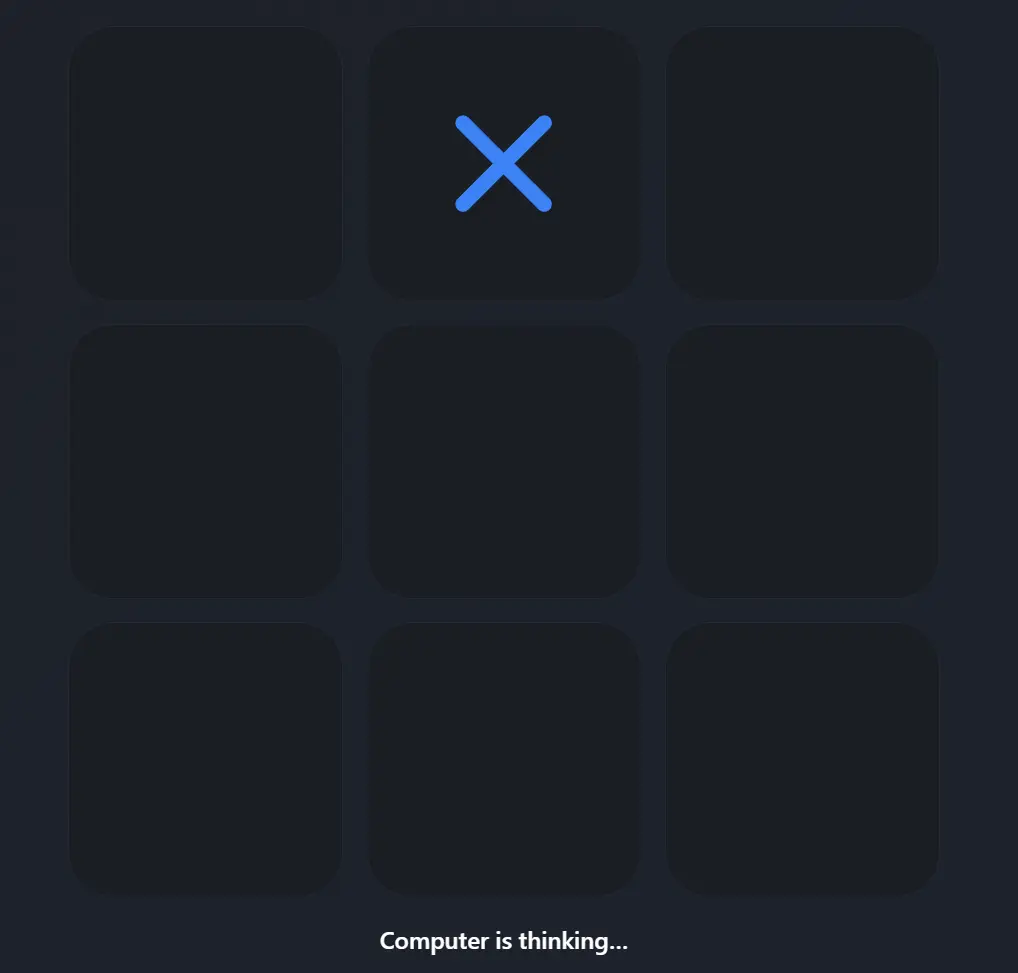
There's a decent chance you learned tic-tac-toe before you learned to ride a bike. A teacher, an older cousin, or a napkin at a restaurant handed you a 3x3 grid, and within about ninety seconds you knew the whole game: draw a line, don't let the other person draw a line first. No manual required. That's rare. Almost nothing else you'll ever play gets out of the way that fast.
Because it's so simple, it's easy to write off as a kid's game, something you graduate from once you find chess or poker or whatever your group chat is obsessed with this month. But tic-tac-toe holds up better than people give it credit for. Once you understand what's actually happening on that grid, it stops being a game you win or lose by accident and becomes one you can control.
Want to try it out while you read? You can play tic-tac-toe online for free against the computer on three difficulty levels, or pass the device to a friend for two-player mode.
Other names for tic-tac-toe
If you grew up somewhere other than the US, there's a decent chance you never called this game tic-tac-toe at all. It's the same 3x3 grid everywhere, just wearing a different name depending on where and when you learned it.
Noughts and crosses is the standard name across the UK, Ireland, Australia, New Zealand, and South Africa, and it describes the marks literally: a nought is the O, a cross is the X. In North America you'll also hear it called Xs and Os as a casual, everyday name for the same game. Some teachers introduce it as three in a row or three in a line, plain descriptions of what you're actually trying to build. Shortened versions like XO show up too, and every now and then a digital or educational version will label it something like triple grid. Different name, same nine squares.
The rules of tic-tac-toe
Two players, one 3x3 board, nine squares. One player is X, the other is O. X moves first, that's tradition old enough that nobody remembers a version without it. Players alternate turns, placing their mark in any empty square. The first person to line up three of their marks, across, down, or diagonally, wins. If all nine squares fill up and nobody's done that, the game is a draw.
That's the entire rulebook. You could recite it from memory after reading it once. The interesting part isn't the rules, it's what happens once two people who actually know what they're doing sit down to play.
The best first move: why the corner beats the center
Most people play their opening move on autopilot. They land in the center because it feels like the safe, obvious choice, or they take whatever square is closest to their hand. Neither instinct is wrong exactly, but neither is the strongest play either.
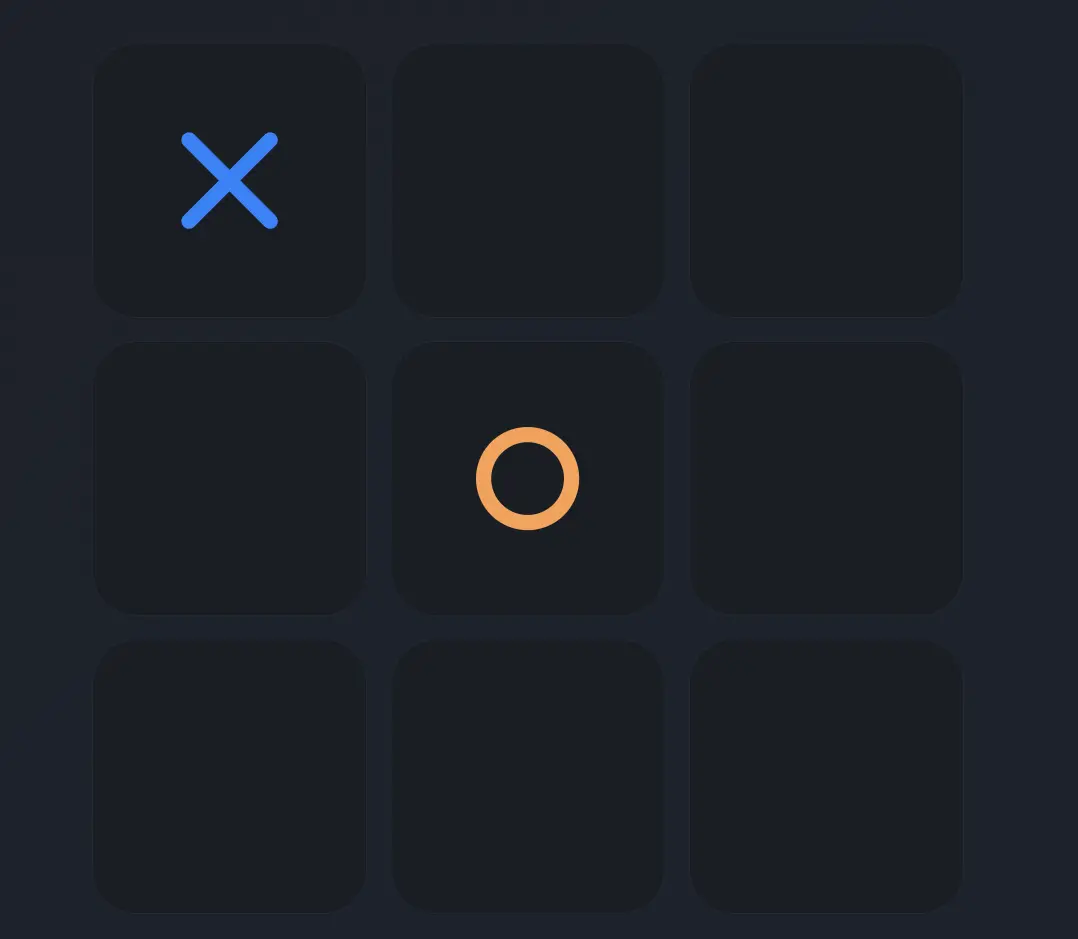
The best opening move is a corner, not the center. A corner square sits on three different winning lines at once (a row, a column, and a diagonal), which gives you more ways to eventually build a threat. Open in a corner, and of the eight ways your opponent could respond, only one, taking the center, keeps the game fully even. Every other reply already puts them at a disadvantage against someone who knows what to do next.
The center is a fine opening too, genuinely not a mistake, but it's the more forgiving choice: it leaves your opponent four safe replies instead of one. If you want to actually pressure someone, start in the corner.
What losing usually looks like: understanding forks
People rarely lose tic-tac-toe because they missed an obvious three-in-a-row. They lose to forks.
A fork is a single move that creates two winning threats at the same time, two different lines that are each one move away from completing. Your opponent can only block one square per turn, so whichever line you didn't block just wins. It feels almost unfair the first time it happens to you, like the board cheated. It didn't. You just weren't looking two moves ahead.
Forks are why corners matter so much, and also why the center matters on defense. If your opponent opens in a corner, your single best response is the center, the one square that touches enough lines to keep you out of fork trouble. If they open in the center, take any corner. If they open on an edge (the least common and weakest opening), the center still keeps you safe.
The habit worth building, more than any specific memorized move, is asking yourself two questions before every turn, in this order: can I win right now? Then, do I need to block right now? Most losses come from skipping straight past both of those questions to fill whatever square looks convenient.
Is tic-tac-toe always a draw?
Between two people who never slip up, yes, tic-tac-toe always ends in a draw. Mathematicians settled this long ago: it's what's called a solved game. Every possible line of play has been mapped, and with perfect play from both sides, neither X nor O can force a win. There are 255,168 possible complete games in total, but only 765 truly distinct positions once you account for boards that are just rotations or mirror images of each other, small enough that a computer, or a patient human, can hold the entire game in its head.
That might sound like it drains the fun out of it. It doesn't, really, it just moves the fun somewhere else. Since a draw is the "correct" outcome, actually winning becomes a story about your opponent's mistake, not just your own cleverness. Playing well isn't about finding some secret winning strategy that doesn't exist, it's about never being the one who blinks first.
If you want to test that against something that never blinks, our tic-tac-toe game has an Unbeatable difficulty that plays perfectly every time. The best result you can force against it is a draw, which makes it a genuinely useful way to practice everything above.
A short history of tic-tac-toe
Grids scratched into stone for three-in-a-row games go back to the Roman Empire, a game called terni lapilli, played with pebbles instead of pen marks. The version we know today, with its familiar names (noughts and crosses in Britain, Xs and Os across Ireland and Canada, tic-tac-toe in the US), settled into place sometime in the 1800s and has been doodled into school notebooks ever since.
It's also, quietly, a piece of computing history. In 1952, a Cambridge researcher named A. S. Douglas built OXO, a version of tic-tac-toe for the EDSAC computer and one of the very first video games ever made. A decade later, in 1961, Donald Michie built something even stranger: a "machine" called MENACE that learned to play tic-tac-toe through trial and error using nothing but 304 matchboxes filled with colored beads. No silicon, no code, just boxes, beads, and a scoring system. It was reinforcement learning before anyone had coined the term. To this day, tic-tac-toe is usually the first game a new programmer teaches a computer to play, because it's small enough to fully understand and just complex enough to be worth the lesson.
Frequently asked questions
What is the best first move in tic-tac-toe? A corner. Of the eight possible replies, only the center keeps your opponent fully in the game; every other reply already loses ground against correct play. The center is a sound opening too, but it gives your opponent more safe options.
Can two people play tic-tac-toe without a computer opponent? Yes, that's the original version of the game. Our online tic-tac-toe game has a two-player mode built in, so you can pass one phone or tablet back and forth instead of finding paper.
What is a fork in tic-tac-toe? A fork is a single move that creates two separate winning threats at once. Since your opponent can only block one square per turn, the other threat wins the game. Learning to spot forks, both yours and your opponent's, is most of what separates a strong player from a beginner.
Is it possible to always win at tic-tac-toe? No. Against an opponent who never makes a mistake, the best possible result is a draw. Wins happen because a real opponent slips up, not because there's a hidden strategy that beats perfect play.
Why does X always go first in tic-tac-toe? It's convention rather than a rule written into the game itself, but it's old and consistent enough that nearly every version of tic-tac-toe follows it, including the one on this site.
Is tic-tac-toe a solved game? Yes. Every one of its 255,168 possible games has been analyzed, and the result with perfect play from both sides is always a draw.
Is noughts and crosses the same game as tic-tac-toe? Yes. Noughts and crosses is simply the name used in the UK, Ireland, Australia, and several other countries for the exact same game Americans call tic-tac-toe. Xs and Os, three in a row, and three-in-a-line are other common names for it.
Play it yourself
Reading about corners and forks only gets you so far. The fastest way to actually build the habit is to play a few rounds and try to apply it live. Head over to our free tic-tac-toe game and try holding a draw against the Unbeatable difficulty, or challenge a friend in two-player mode. Either way, take the corner.